
Build a Personal Brand That Opens Doors. (Start with a Logo.)
TL;DR: A personal brand isn't a vanity project — it's a career asset. The professionals who get remembered, referred, and hired aren't necessarily the most qualified in the room; they're the ones whose value is clear the moment someone looks them up. That clarity starts with a strategic foundation — what we call your Brand Sentence — and becomes tangible through a logo, color palette, and consistent visual identity you can actually deploy.
Quick Answers
Definition: Personal branding is the intentional process of shaping how people recognize, remember, and trust your professional value.
- Start With: Define what you do, who you help, and what you want to be known for.
- Make It Recognizable: Turn that clarity into consistent messaging, visuals, and a professional presence.
- Why It Matters: A strong personal brand makes your expertise easier to understand, remember, and refer.
Key Takeaways:
- Start with clarity: Define what you do, who you help, and what you want to be known for.
- Make it recognizable: Align your messaging, visuals, and professional presence.
- Show up consistently: Focus on the channels where your audience already pays attention.
- Build proof over time: Let your work, expertise, and results reinforce your reputation.
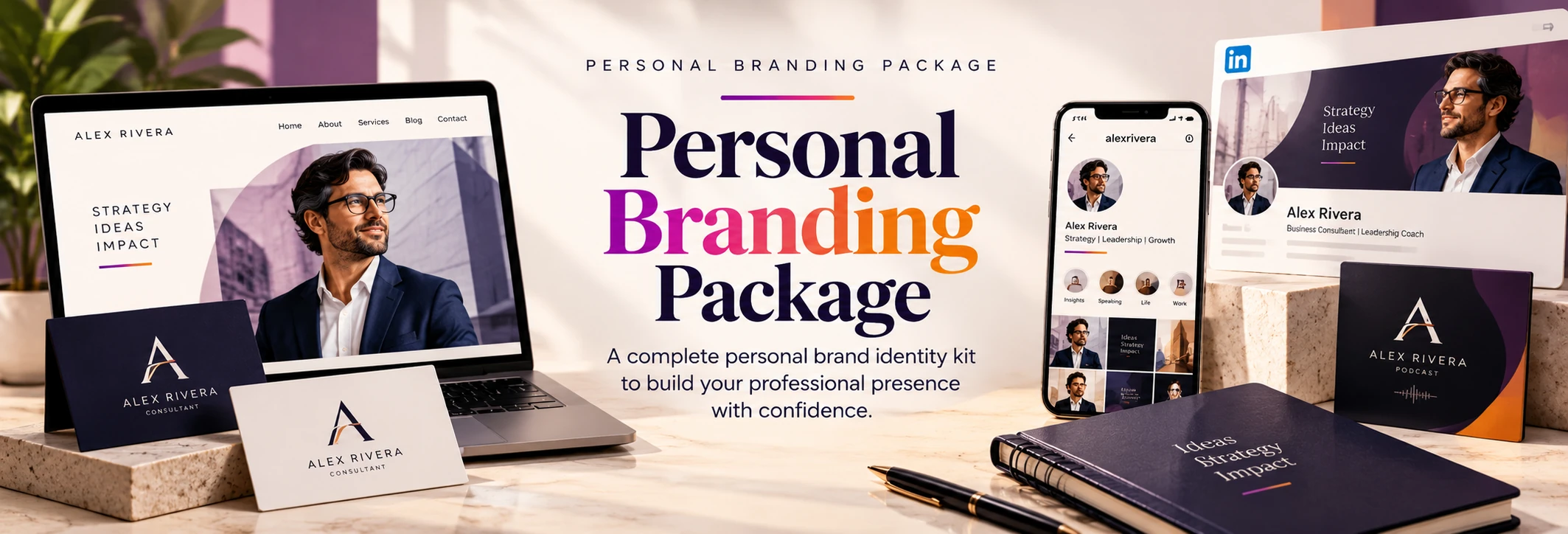
Ready to build a personal brand that opens doors? Explore our Personal Branding Package to create a polished, professional brand that reflects your expertise and helps you stand out.
(Last updated on September, 19, 2026)
Portfolio: Your Brand, Your Future. See Our Work.
Instead of a long pitch, here's proof. Each of these professionals started with one sentence and ended with a visual identity that made their expertise instantly recognizable.


Personal Branding: The 4-Part Framework
PART - 1. Define Your Personal Brand
Before you can build a recognizable personal brand, you need clarity on what you stand for. Define who you help, what you do, and what you want to be known for—so every message and visual has a clear direction.
Use this simple framework to define your positioning:
I help [who you help] achieve [desired outcome] through [your expertise, approach, or unique strength].
Examples:
- Fitness Coach: I help busy professionals build sustainable fitness habits and achieve their health goals without extreme routines.
- Business Consultant: I help founders simplify complex challenges and make confident strategic decisions.
- Career Coach: I help ambitious professionals communicate their strengths and pursue more meaningful opportunities.
Your Brand Sentence doesn't need to become your tagline. Think of it as a positioning tool that helps align your bio, portfolio, messaging, content, and visual identity around one clear idea.
Before building or refreshing your personal brand, assess what is already working and what needs clarity.
- Can someone understand what you do within a few seconds?
- Is it clear who you help or the audience you want to attract?
- Can you explain your expertise in one memorable sentence?
- Do your professional profiles communicate a consistent message?
- Does your work demonstrate the expertise you claim?
- Do you have a recognizable perspective or point of view?
- Is your visual presentation consistent across key touchpoints?
- Do you have testimonials, results, or other proof of your capabilities?
- Are you creating content or sharing insights relevant to your expertise?
- Is there a clear next step for someone who wants to work with or contact you?
A useful rule: If several answers are unclear, fix your positioning before investing heavily in visual identity or content production.
Authenticity isn't the opposite of strategy, it's the input strategy needs. To improve your personal branding without sounding fake:
- Ground it in your Brand Sentence, not buzzwords. Specific, honest positioning reads as confident; generic superlatives read as try-hard.
- Use plain language and real examples. Being knowledgeable but approachable comes from explaining ideas simply and backing them with concrete stories, not credentials alone.
- Pick one strength to be known for. Trying to be memorable for everything makes you memorable for nothing, choose the specific thing you want people to say about you.
- Let visuals do quiet work. A consistent logo, palette, and photo across platforms builds recognition passively, so you don't have to self-promote loudly.
Your personal branding is clear enough when a stranger can read your LinkedIn headline or business card and immediately understand who you help and how. If they can't, watch for these red flags:
- Your bio reads differently on LinkedIn, your resume, and your website.
- You hesitate when someone asks, "So what do you do?"
- Your logo, if you have one, looks blurry or illegible at small sizes.
- Your visual identity hasn't changed in years despite a change in role or focus.
If two or more of these apply, the fix usually starts with revisiting your Brand Sentence, then rebuilding the visual identity around it; which is precisely the Discover → Design → Deploy process outlined above.
PART - 2. Package Your Personal Brand
Once your positioning is clear, turn it into a professional system people can quickly recognize and understand. Your bio, photography, visual identity, and portfolio presentation should all reinforce the same reputation—not compete with it.
A strong professional bio should do more than list credentials. It should quickly explain who you are, what you do, and why your experience matters.
A simple bio structure:
- Who you are: Your role or professional identity
- What you do: Your area of expertise
- Who you help: Your audience or industry
- Why trust you: Relevant experience, achievements, or credentials
- What makes you different: Your approach or perspective
- What's next: A clear way to connect or learn more
Simple framework:
[Name] is a [role] who specializes in [area of expertise]. They help [audience] achieve [outcome] through [approach]. With experience in [relevant background], they are known for [distinctive strength or perspective].
Your visual identity doesn't need to be complicated, but it should be consistent enough to make your personal brand recognizable across touchpoints.
Your essential visual kit:
- Logo or wordmark: A distinctive signature for professional use
- Color palette: A focused set of primary and supporting colors
- Typography: Consistent heading and body fonts
- Profile imagery: A recognizable approach to photography and portraits
- Logo variations: Light, dark, and simplified versions for different uses
- Usage guidelines: Basic rules for spacing, sizing, and placement
Your photograph is often one of the first personal brand assets people encounter. It should feel consistent with the reputation you're building.
Photo guidelines:
- Use recent, high-quality images
- Prioritize clear, natural expressions over overly staged poses
- Match the tone to your industry and positioning
- Include both close-up and environmental images
- Prepare horizontal and vertical crops for different platforms
- Maintain a consistent visual style across key channels
- Update photos when your appearance or positioning changes significantly
You don't need a large production. A small, versatile collection of professional images is usually more useful than dozens of unrelated photos.
From Positioning to Visual Identity: The KM Digital Creatives Difference
Most personal branding advice falls into one of two traps. Strategy-only advice tells you to "find your voice" and "be authentic" — true, but vague, and impossible to act on Monday morning. Design-only work hands you a pretty logo with no story behind it, so it feels soulless and forgettable the moment someone asks, "So what do you actually do?"
This is the exact gap KM Digital Creatives was built to close: pairing brand strategy with visual execution through a simple three-step bridge — Discover → Design → Deploy. We start with who you are and who you help, then translate that into a mark, palette, and set of platform-ready assets that carry the message everywhere you show up.
The payoff is measurable. According to LinkedIn's own platform data, profiles with a professional photo receive significantly more views than those without one, and members who complete their profile with consistent visual branding are found in search far more often. Visual consistency isn't decoration — it's discoverability.
See How We Turn Positioning Into Visual Identity in our Personal Branding Package →
PART - 3. Distribute Your Personal Brand
A well-defined and professionally packaged personal brand still needs visibility. Distribution is about showing up consistently in the places where your audience already pays attention—not trying to be everywhere at once.
Start with one platform that best fits your expertise, audience, and preferred way of communicating.
- LinkedIn: Best for professional expertise, B2B audiences, networking, and career visibility.
- X: Useful for sharing quick insights, opinions, conversations, and industry commentary.
- YouTube: Best for deeper education, demonstrations, tutorials, and building trust over time.
You don't need to be active everywhere. Choose one primary channel, build consistency, and expand only when you have a sustainable system.
Consistency matters more than publishing constantly. Choose a rhythm you can realistically maintain alongside your actual work.
A simple starting point:
- LinkedIn: 2–3 posts per week
- X: 3–5 short posts per week
- YouTube: 2–4 videos per month
Use a repeatable mix of content rather than constantly searching for new ideas. Share lessons from your work, useful frameworks, opinions, behind-the-scenes insights, and answers to questions your audience already asks. The goal is not to fill a content calendar. It's to repeatedly reinforce the expertise you want to be known for.
The same idea can travel across platforms, but adapt the format to each audience.
LinkedIn: Insights, case studies, industry perspectives, and practical frameworks.
X: Quick observations, opinions, lessons, and conversations.
YouTube: Explainers, tutorials, in-depth case studies, and behind-the-scenes content.
Start with one core idea, then adapt how you present it—consistency without copy-pasting.
PART - 4. Demonstrate Your Expertise
A personal brand is strengthened by more than what you say about yourself. Visible work, consistent presentation, and proof from real-world experience help turn positioning into something people can evaluate and trust.
A portfolio should do more than display finished visuals. Whenever possible, give people enough context to understand what they are looking at and why the work matters.
For selected projects, briefly explain:
- Who the brand or professional is
- The industry or area of expertise
- The idea behind the identity
- A distinctive visual decision or detail
- How the design supports the intended positioning
You don't need a full case study for every project. Even a short description can turn a visual from something people simply see into something they understand.
Proof doesn't always need to come in the form of revenue figures or dramatic before-and-after comparisons. For many professionals, credibility is built through smaller signals that reinforce expertise. Useful proof can include:
- Client testimonials or recommendations
- Relevant experience and credentials
- Recognizable clients or collaborations
- Published work or industry features
- Speaking engagements or interviews
- Awards or professional recognition
- Clear examples of consistent work over time
The strongest proof supports the reputation you want to build—it shouldn't feel like a disconnected list of achievements.
Your strongest work should be easy to find. A portfolio is not an archive of everything you've ever created; it's a curated argument for the kind of work you want to attract next.
When selecting work to feature:
- Lead with projects that reflect your current positioning
- Prioritize quality and relevance over quantity
- Show variety without diluting your specialty
- Remove work that no longer represents your standards
- Keep descriptions concise and useful
- Update featured work as your expertise evolves
Featured - Personal Branding Portfolio
A glimpse at how thoughtful logo design translates personality, expertise, and individual stories into distinctive visual identities.
| Fine Jewellery Line | Luxury Fashion & E-Commerce
Client needed a refined visual identity built around her name, creating a unique signature that reflects her expertise and establishes a recognizable presence in the fine jewellery space.
| Massage Spa | Health & Wellness Industry | Rotterdam
The founder was looking for a design that reflected his personality and approach to wellness, which we translated into a warm visual signature that helps the business feel more human and recognizable in a crowded local market.
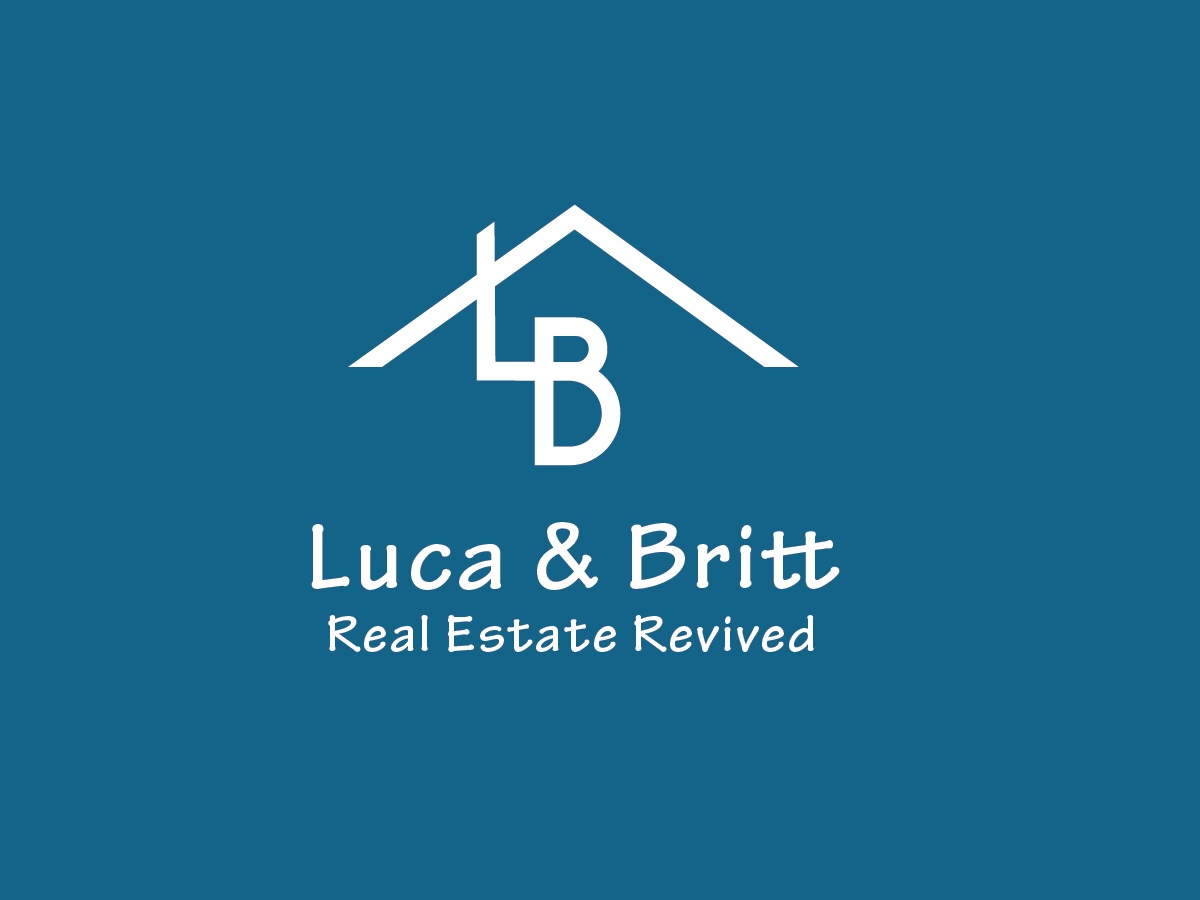
| Couple-Led Real Estate Agency | Combination Logo Personal Mark
The couple needed an identity that brought both founders to the heart of the brand, creating a distinctive mark that reflects their partnership and makes their agency feel more personal and memorable.
Why Choose KM Digital Creatives?
Feature | KM Digital Creatives | DIY Logo Makers | Freelance Designers |
|---|---|---|---|
Strategy-first approach | Yes — Brand Sentence anchors every design | No | Rarely |
Platform-specific usage guide | Included | Not offered | Varies |
Authenticity focus | Core to the process | Generic templates | Depends on designer |
Revisions included | Yes | Limited/none | Often extra cost |
Custom-built identity | Tailored to the brand's positioning | Template-based | Varies by designer |
Ready for a Personal branding that works as hard as you do? Let's talk. →
Build Your Personal Brand in 7 Steps
Want a simpler starting point? Use this time-boxed plan to turn the framework above into practical action. You can complete the first version of your personal brand foundation in around 6 hours, then refine it as you learn what resonates.
- Audit Your Brand — 30 mins
Review your messaging, visuals, profiles, and proof. Outcome: Clear priorities. - Write Your Brand Sentence — 45 mins
Define who you help, how, and why. Outcome: Focused positioning. - Refine Your Bio + Headline — 60 mins
Turn positioning into a clear introduction. Outcome: Consistent profile messaging.
- Create Your Visual Kit — 90 mins
Define your logo, colors, and typography. Outcome: A recognizable visual foundation. - Optimize Key Profiles — 45 mins
Align your photo, bio, links, and visuals. Outcome: A consistent presence. - Set Your Content Cadence — 60 mins
Choose a channel, rhythm, and formats. Outcome: A sustainable visibility plan. - Set Up Measurement — 30 mins
Track the signals that matter. Outcome: A simple progress baseline.
More details on our personal branding service and its simple 3-step process
1. Personal Logo Design
Three initial concepts built around your goals, two rounds of revisions, and final files formatted for web, print, and social use, plus a matching color palette.
2. The Full Brand Kit
Everything in the logo package plus your custom Brand Sentence, full color and typography system, and ready-to-use social media templates for LinkedIn, Instagram, and email signatures.
3. Brand Strategy & Audit
A one-on-one consultation, competitor positioning analysis, and clarity audit of your current online presence to identify what’s working, what needs refinement, and how your personal brand can better reflect your expertise and goals.
KM Digital Creatives: Strategic research, scalability testing, full brand system, cultural review, and post-launch support.
Freelance Designers: Quality and process vary by individual; strategy and testing may be limited.
Freelance Platforms: Access to many designers at different price points, but quality, consistency, and strategic involvement can vary significantly.
DIY Logo Tools: Fast and affordable, but offer limited customization, strategic input, and scalability testing.
Frequently Asked Questions on Personal Branding 💬
Signs include an old headshot, a logo or bio that no longer matches your current role, and visuals that look pixelated or awkward on mobile. Start with your visual identity — it's the fastest-noticed element — then update your bio and Brand Sentence to match.
Write your Brand Sentence down and use it or a close variation, every time you introduce yourself, in your LinkedIn headline, and in your elevator pitch. Pair it with the same headshot, colors, and tone everywhere you appear, online and offline.
The two most common mistakes are inconsistency (different bios, colors, or messages across platforms) and inauthenticity (trying to sound like someone else). Avoid both by anchoring every piece of content and every visual asset to one clear, honest Brand Sentence.
A Brand Sentence is one clear sentence defining who you help, what you do, and why it matters, for example, "I help mid-career professionals negotiate salaries with confidence." It's the strategic anchor that keeps your visuals, bio, and conversations aligned.