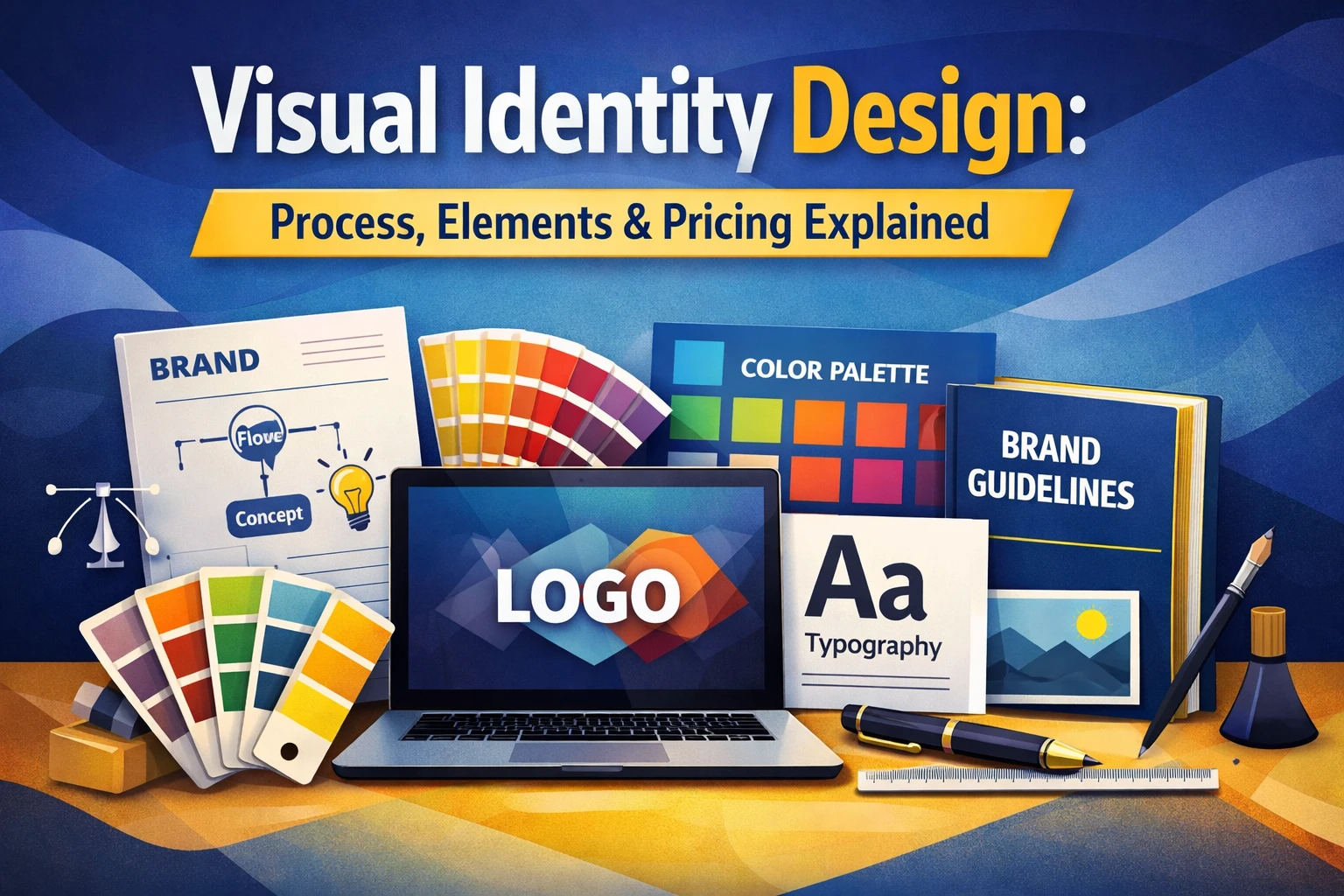
A brand’s visual presence plays a major role in how it is perceived, remembered, and trusted. Long before customers read your messaging, they respond to what they see — logos, colors, typography, and layout choices all shape first impressions.
This guide explains how a professional visual identity is created, what elements it includes, how the process works, and what businesses should expect in terms of investment.
What Is Visual Identity Design?
Visual identity refers to the complete set of visual elements that represent a brand across platforms. It translates brand strategy into a consistent visual language that audiences can recognize instantly.
A strong visual system helps brands appear credible, stay consistent across touchpoints, and build long-term recognition. According to Nielsen Norman Group, consistency in visual presentation improves usability and user trust, especially in digital products.
How Is Visual Identity Different From Brand Identity?
This is one of the most common branding questions.
Brand identity defines the foundation of a business — its purpose, values, positioning, messaging, and voice. Visual identity is the outward expression of that foundation through design.
In simple terms:
-
Brand identity explains who you are
-
Visual identity shows how you look
The Interaction Design Foundation explains that visual design is most effective when it supports strategy rather than decoration.
What Are the Key Elements of a Visual Identity System?
A professional visual identity system is made up of several connected components:
-
Logo system – Primary logo, secondary versions, icons, and usage rules
-
Color palette – Core brand colors with supporting and accent shades
-
Typography – Font pairings for headlines, body text, and digital use
-
Imagery style – Photography direction, illustrations, and iconography
-
Layout principles – Spacing, grids, hierarchy, and alignment
-
Brand guidelines – Rules that ensure consistency over time
Together, these elements ensure the brand looks cohesive across websites, social media, presentations, and marketing assets.
What Is the Visual Identity Design Process?
A structured process ensures the identity works in real-world use, not just in mockups.
1. Brand discovery
Research into the business, audience, competitors, and positioning.
2. Visual direction
Defining mood, tone, and design principles aligned with the brand.
3. Design exploration
Developing logo concepts, color systems, and typography.
4. Refinement and validation
Testing designs for clarity, flexibility, and scalability.
5. Final assets and guidelines
Delivering files and documentation for consistent future use.
This approach helps brands avoid short-term trends and build systems that scale.
What Are Some Visual Identity Design Examples?
Different industries require different visual identity approaches based on audience expectations and brand positioning.
The examples below show how visual systems adapt across professional services, startups, technology, and lifestyle brands.
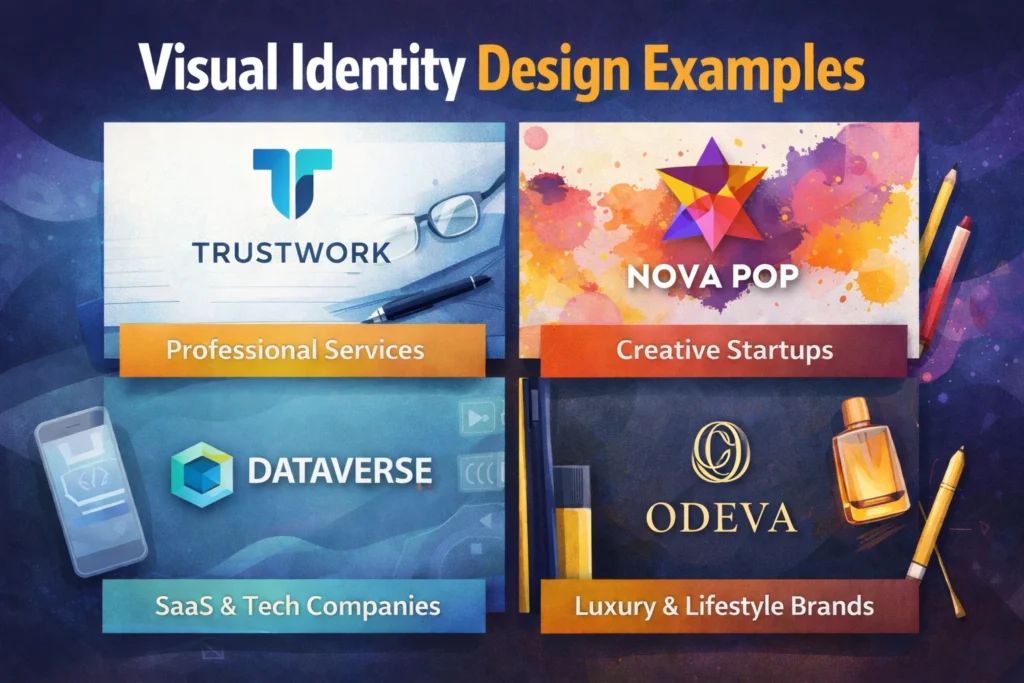
Common examples include:
-
Minimal, typography-led systems for professional services
-
Bold, expressive visuals for startups and creative brands
-
Clean, modular identities for SaaS and tech companies
-
Refined aesthetics for luxury and lifestyle brands
According to HubSpot, consistent brand presentation across channels strengthens recognition and reinforces trust.
Who Needs Professional Visual Identity Design?
A professionally built visual identity is especially valuable for:
-
Startups launching a new brand
-
Businesses preparing to scale
-
Companies undergoing rebranding
-
Founders targeting premium clients
-
Brands with inconsistent visuals
If your brand looks different on every platform, it creates confusion. Consistency builds confidence.
How Much Does Visual Identity Design Cost?
Pricing depends on the scope and depth of work involved.
Key factors include:
-
Number of brand assets required
-
Level of research and strategy
-
Business size and complexity
-
Long-term scalability needs
A logo alone is not a complete identity system. Full brand systems cost more because they deliver clarity, consistency, and long-term value.
See the full breakdown here: Branding Package Cost
Visual Identity Design Pricing (Indicative)
| Package Type | Best For | Includes | Typical Investment (USD) |
|---|---|---|---|
| Starter Visual Identity | Early-stage startups | Logo system, basic colors, typography | $450 – $750 |
| Complete Visual Identity | Growing brands | Logo, colors, typography, visual styles, guidelines | $950 – $1,500 |
| Brand System Design | Scaling businesses | Full identity system, layouts, multi-platform assets | Custom Pricing |
Get a Custom Visual Identity Designed for Your Brand
A well-structured visual identity helps your brand stand out, stay consistent, and build trust across every interaction. If your goal is long-term growth with clarity and confidence, investing in a cohesive visual system is a foundational step.
FAQ: Visual Identity Design
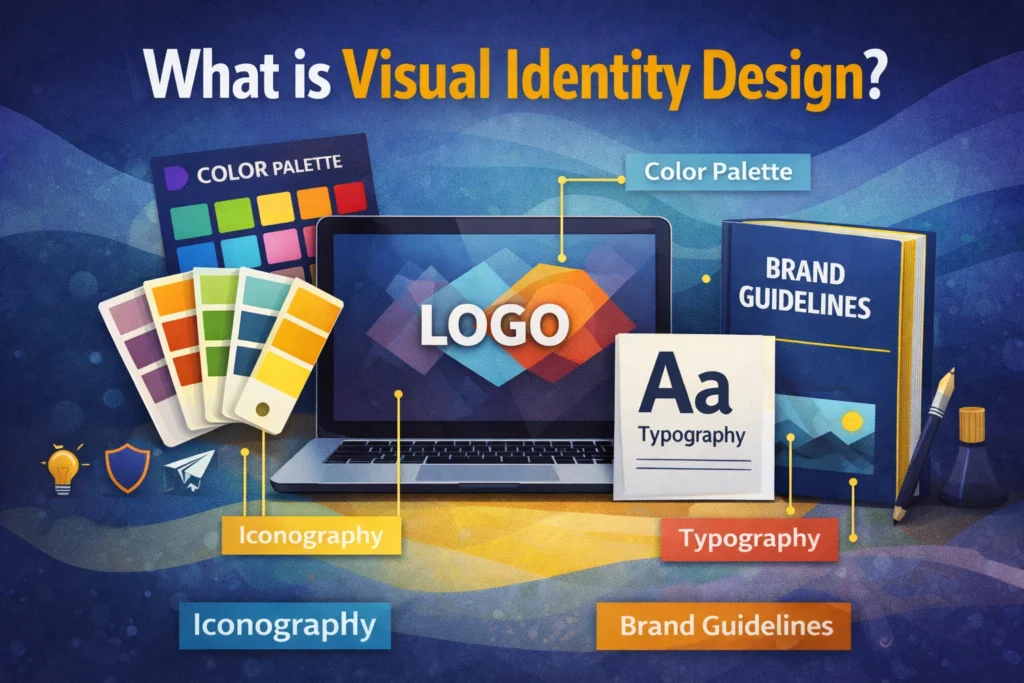
Visual identity design brings together logos, colors, typography, and brand guidelines into one cohesive system. The visual below explains the core elements that work together to shape a brand’s overall look and consistency.
What Is a Visual Identity?
A visual identity is the collection of visual elements that represent a brand, such as logos, colors, typography, imagery, and layout rules. Together, these elements ensure the brand appears consistent and recognizable across all platforms.
Is a Logo Enough for Branding?
No. A logo is just one component. A complete visual identity includes the logo along with fonts, color systems, imagery styles, and usage guidelines that function as a unified brand system.
What’s Included in a Visual Identity Package?
A typical package includes a logo system, color palette, typography system, supporting visual styles, and brand guidelines. The exact scope depends on the business size, industry, and branding goals.
Why Does Visual Consistency Matter for Brands?
A strong visual identity helps build recognition, trust, and consistency. It allows audiences to identify a brand quickly and creates a professional, credible impression across every touchpoint.
How Long Does a Visual Identity Project Usually Take?
Most projects take three to six weeks, depending on the complexity of the brand, number of assets required, and the feedback process.
What Affects the Cost of a Visual Identity?
Pricing varies based on the scope of work, level of strategic input, and number of brand assets included. Comprehensive brand systems typically cost more than logo-only work.
When Do You Need More Than Just a Logo?
Yes, if your branding feels inconsistent or unclear. A logo on its own often leads to mismatched visuals, while a full identity system provides structure and consistency.