
When people think of logos, they often imagine symbols, icons, or abstract marks. But some of the most recognizable brands in the world rely on something far simpler—and far more intentional: typography.
That’s where wordmark logo examples become incredibly useful.
Seeing how real brands apply wordmarks helps you understand why this logo style works, when it works best, and how subtle typography decisions can completely change brand perception.
A wordmark logo is a logo style that uses typography alone—without symbols or icons—to represent a brand name. The entire identity relies on letterforms, spacing, and structure, making design decisions especially important.
Whether you’re exploring logo ideas for your business or studying brand identity design, examples give context that definitions alone can’t.
Why Do Examples Matter When Choosing a Wordmark Logo?
Examples reveal what theory cannot. They show how typography behaves in real-world settings—on websites, packaging, signage, and digital platforms.
Common wordmark logo examples include:
-
Global consumer brands
-
Professional service businesses
-
Digital-first and tech companies
-
Personal and founder-led brands
Studying these examples helps you focus on structure, not surface-level trends.
For a clear comparison of a wordmark vs logo and guidance on choosing the right option for your brand, explore our detailed guide here.
Famous Wordmark Logo Examples
Some of the world’s most iconic brands use wordmark logos to build trust, memorability, and clarity at scale.

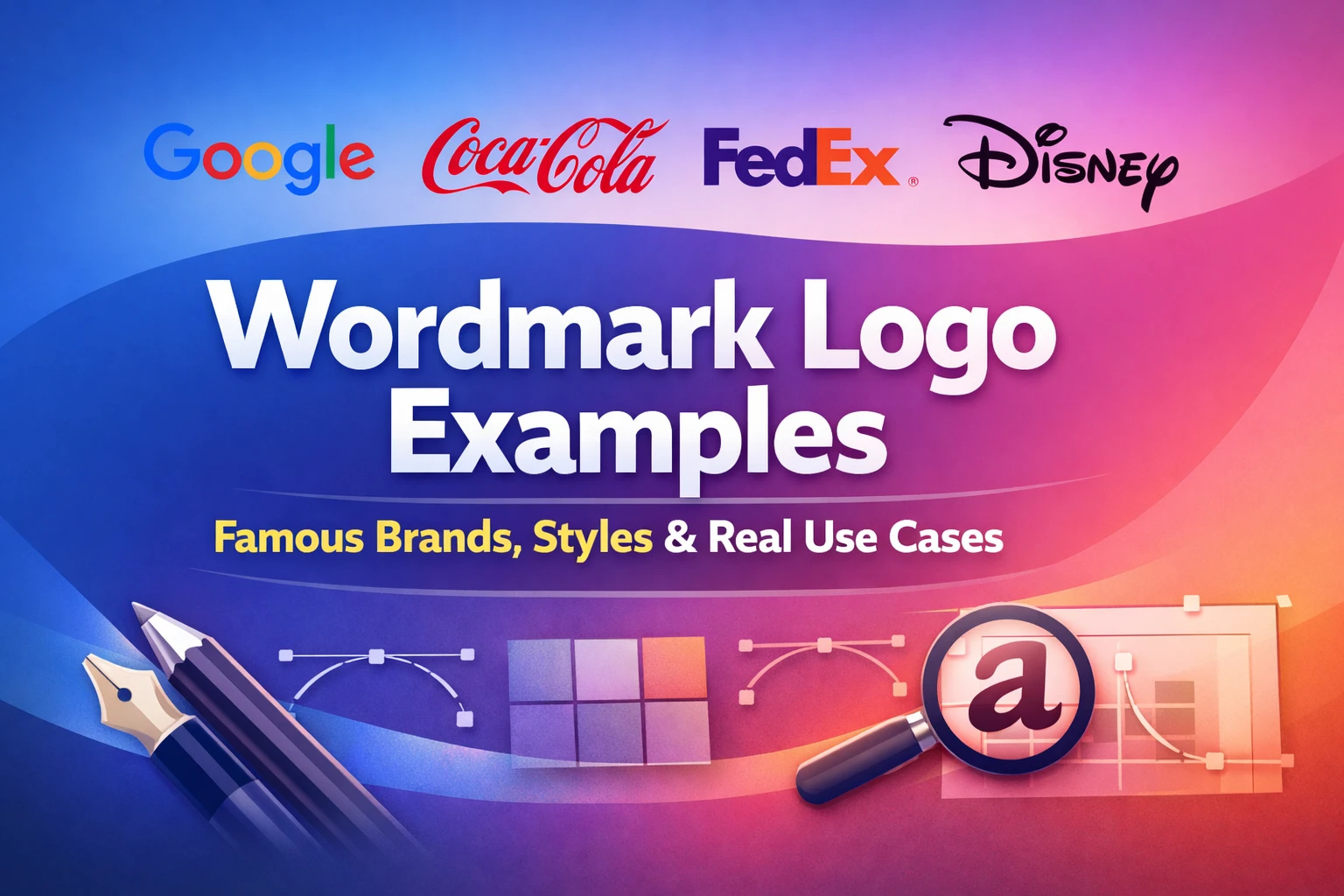
- Google’s wordmark is clean, friendly, and highly legible. Its custom sans-serif typography and balanced proportions reinforce approachability while remaining functional across digital platforms.
- Coca-Cola’s flowing script wordmark is a classic example of heritage branding. The typography alone communicates familiarity, nostalgia, and emotional connection—without the need for an icon.
- FedEx’s wordmark demonstrates how precision typography can communicate function. Tight kerning and the hidden arrow between letters subtly reinforce speed and reliability.
- Disney’s handwritten-style wordmark instantly signals imagination and storytelling. The typography itself becomes part of the brand experience.
Many of the most recognizable global brands rely on wordmark logos, demonstrating that typography alone can carry brand recognition and trust when executed correctly.
Wordmark Logo Examples by Style
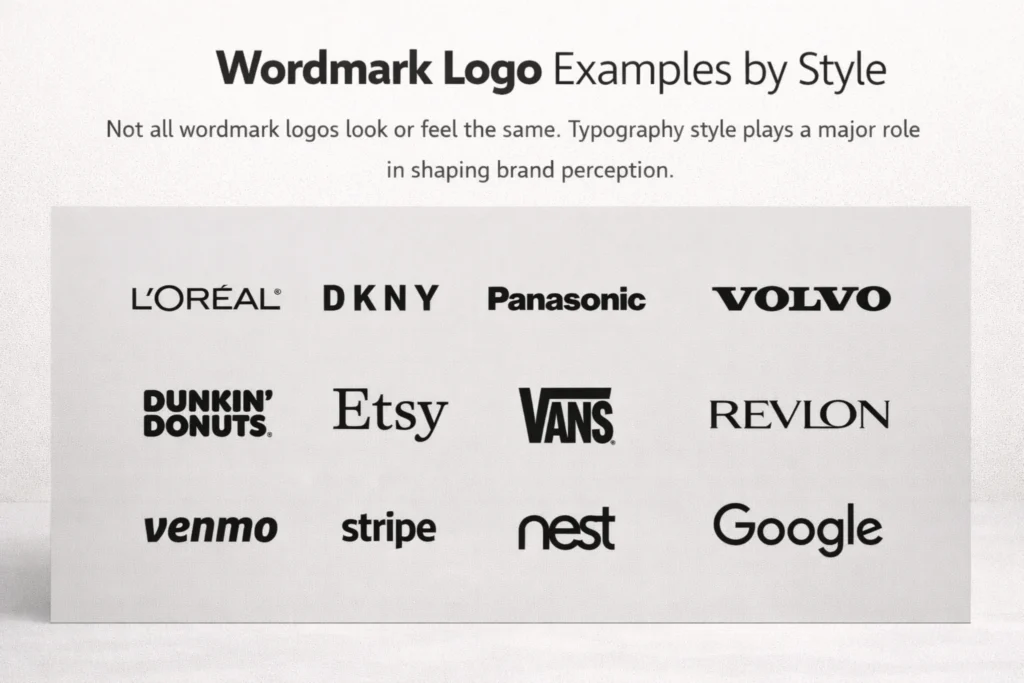
Not all wordmark logos look or feel the same. Typography style plays a major role in shaping brand perception.
Minimal Wordmark Logo Examples
Minimal wordmarks focus on clarity and restraint. Clean fonts, balanced spacing, and neutral palettes help brands appear modern and professional.
Best suited for: SaaS brands, consultants, startups
Key traits: Simple letterforms, generous whitespace, high legibility
Bold Wordmark Logo Examples
Bold wordmarks use heavier typefaces to create visual impact and memorability, especially in crowded markets.
Best suited for: Retail, fitness, consumer-facing brands
Key traits: Thick strokes, strong contrast, confident presence
Modern Wordmark Logo Examples
Modern wordmarks often involve custom typography or subtle font modifications. These designs feel current without relying on short-lived trends.
Best suited for: Creative agencies, tech companies, personal brands
Key traits: Geometric structure, contemporary fonts, adaptability
Classic Wordmark Logo Examples
Classic wordmarks emphasize timelessness. Serif fonts or script typography convey credibility, tradition, and refinement.
Best suited for: Luxury brands, fashion, hospitality
Key traits: Elegant letterforms, refined spacing, enduring appeal
Real-World Wordmark Logo Examples
Famous brands offer inspiration, but real-world execution is where wordmark logos prove their effectiveness.
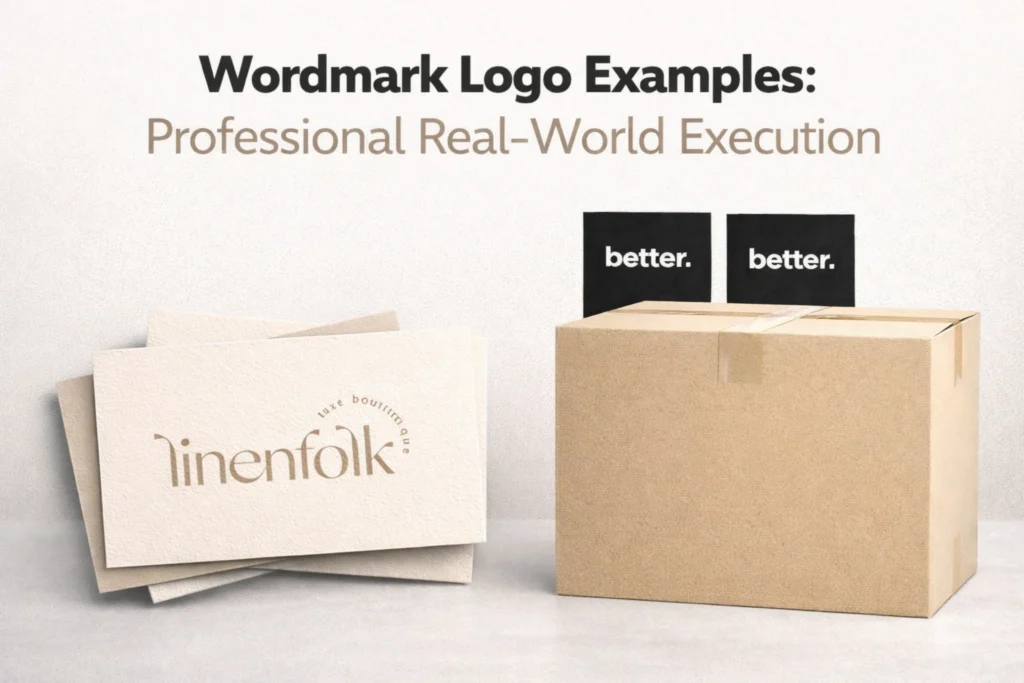
Professional wordmark designs demonstrate how typography translates into functional brand systems—logos that remain clear and consistent across websites, print materials, packaging, and social platforms.
Professional portfolio reference:
Beyond famous brands, real-world execution plays a major role in how effective a wordmark becomes. Our wordmark typography logo design portfolio shows how typography choices translate into usable brand identities:
These real-world wordmark logo examples highlight that successful design isn’t about decoration—it’s about precision and usability.
According to GoDaddy’s branding guidelines, wordmark logos rely entirely on typography to establish recognition, making font choice, spacing, and legibility essential to brand success.
What Makes a Wordmark Logo Example Effective?
Not all wordmark logos work equally well. Strong examples consistently share a few foundational traits.
1. Clear Spacing and Kerning
Balanced spacing ensures the wordmark remains readable and visually polished. Poor kerning can undermine even the strongest brand name.
2. High Legibility at Any Size
Effective wordmark logo examples remain clear whether viewed on a mobile screen or a billboard.
3. Adaptability Across Media
A strong wordmark works in color, black and white, and reversed layouts—without losing impact.
4. Alignment With Brand Personality
Typography communicates emotion. The font style, weight, and structure should reflect the brand’s voice and audience expectations.
When evaluating wordmark logo examples, these structural qualities matter far more than visual trends.
Conclusion: Study Structure, Not Trends
Wordmark logo examples offer more than inspiration—they provide practical insight into how typography shapes brand identity.
From globally recognized brands to professionally executed real-world designs, wordmarks prove that simplicity can be powerful when supported by strong structure.
Instead of chasing trends, study spacing, legibility, and adaptability. These principles ensure your wordmark remains effective long after design fads fade.
A successful wordmark logo isn’t about doing more—it’s about doing typography right.